Physiology of Addiction
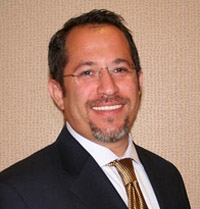
All Treatment had the pleasure of discussing the Physiology of Addiction with Dr. Jason Powers, Chief Medical Officer at Spirit Lodge in Texas.
AT: What causes addiction?
Dr. Jason Powers: What causes addiction? That's a great question. We know that there is interplay between three main factors which contribute to addiction: the host, the agent, and the environment. There can be host factors that are either protective or put the host at an increased risk, for example if there's family history of alcoholism or addiction, then there's an increased risk for that host. Or some people may not metabolize alcohol very well and get sick, so that's a protective factor. The agent, which is the substance used also has a role to play. With alcohol, it usually takes a while for the addiction to get activated, however with other drugs such as cocaine, the addiction happens in a pretty short period of time. The environment is the last factor, so those that are living in an environment that could lead to increased use would obviously put someone at more risk. However those that are living in environments that offer healthy alternatives such as coping skills, pleasurable activities, and good role models all serve as protective factors.
We know what addiction looks like when you've crossed that line and we know the risk factors ahead of time but it's hard to define a formula for what causes addiction.
We know that the disease of addiction follows a progression and occurs over time. There is a point at which, one's control is lost, and that's addiction. Addiction is not just a question of how much you're using and for how long – we're trying to define a way that the brain changes as a result of the interplay of those factors. The line at which you cross into addiction is fuzzy. We know what addiction looks like when you've crossed that line and we know the risk factors ahead of time but it's hard to define a formula for what causes addiction.
AT: How is the brain affected by addiction?
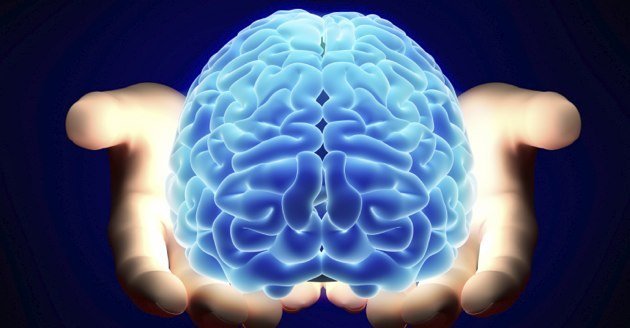
Dr. Jason Powers: The brain is greatly affected by the disease of addiction. It's the kind of addiction that targets the brain. We know today that addiction is a brain disease and there's a certain part of the brain that is targeted by the disease, and that is the limbic system, or the pleasure center, it's also a very primitive part of the brain. What happens as a result of exposing a brain to mind-altering substances is that the brain starts assigning a value to drugs that is higher than the value it assigns other things that create a sense of fulfillment and even survival. So people will choose drugs over things they need to survive, and we call that "hijacking the brain".
The brain is affected because our judgment is actually supplanted by a very primitive part of the brain that wants to get the drug at all cost. So it causes people with the disease of addiction to fall victim to the disease itself. In the beginning of an addiction, will power is involved because no one is repeatedly forcing drugs or alcohol into the body. At some point however, will power is lost and the brain of an addict is rendered very primitive actually, almost like an amphibian or reptile. This is because the frontal lobe, which makes human beings human, doesn't have much input over the limbic system because the limbic system is going full steam ahead, getting the drugs or alcohol at any cost. We know that there are fundamental changes that occur in that pleasure center that are irreversible; meaning once an addict, always an addict. We can put someone with 20 years of sobriety into an MRI machine and flash their drug of choice on the screen in front of them for a millisecond – very quickly – so fast in fact the frontal lobe doesn't even know it's being shown, yet parts of the brain will light up that reflect craving and trigger. So at a very primitive level, these changes are permanent.
At some point however, will power is lost and the brain of an addict is rendered very primitive actually, almost like an amphibian or reptile.
Now on the flip side, we know that healing happens. So if someone can stay sober for long enough, about two to five years, their brain will start to look like someone that has never abused drugs or alcohol, of course with age appropriate changes. The great news is that treatment is effective and that healing happens. In fact, if you ask someone that has been sober for a long time, that although they felt good at one time using drugs, they never have felt better in their lives.
AT: What role does genetics play in addiction?
Dr. Jason Powers: Genetics play a decent role in addiction, similar to Type II Diabetes actually which has about 40-60% genetic influence, which is the same for addiction, about 40-60%. And those figures come from research and data we've done for years on alcoholics. We know that if you have one parent that has alcoholism, the chance of an offspring having it is 40%. If you have a brother or sister with alcoholism, you have about a 25% chance of having it. Now if that brother or sister is an identical twin, then you have about a 55-60% chance of having it. The general population however only has about a 10% shot of having addiction.
Now if you look at identical twins, and if this were a 100% genetic disease then you would think to yourself if one twin has an addiction, then surely the other one will too because that would be the same sperm, the same egg, the same genetic code. In reality though, it's only 55-60% because this disease, while it has a genetic component is not 100% genetic. For example, if you take a raging alcoholic's child and they are raised in a home without alcoholism, there's still a 40% chance that the child will develop alcoholism. And if you take a non-alcoholic's child and raise them in a home with alcoholics there's only about a 10% chance that child will develop alcoholism.
the general population however only has about a 10% shot of having addiction.
We did an interesting study with rats because we can easily manipulate a rat population — it's very difficult to manipulate the human population, we don't tend to breed with each other on cue [joking]. But if you put a whole bunch of rats in a cage and you put one bowl of water on one side of the cage and a bowl of water laced with vodka on the other side of the cage, you tend to find about 10% of the rats will congregate around the vodka water. So if you take those rats and you breed them and breed them and breed them, and continue to take the rats congregating around the vodka water and breed them and breed them, you can, in a laboratory, produce a 100% alcoholic-only preferring strain of rat.
AT: Wow…
Dr. Jason Powers: Exactly, wow! Because there is something that is passed generation to generation that can produce the disease of alcoholism. Now these weren't bad rats, they didn't have a lack of will power, it's not like they weren't religious enough, and they weren't traumatized. In a laboratory, you can eventually produce a rat that only drinks alcohol. And even more interesting, they would go on binges – they would behave alcoholically. They would drink, drink, drink, and then they would pass out. They would fight with each other, they would stop showing up for work [joking].
AT: What methods are most effective for treating addiction?
Dr. Jason Powers: This is great; we've done outcome studies in treating addiction and universally we know that a combination of individual or group therapy combined with the 12 steps or something similar offers the best outcome as long as there is a substantial after-care program in place. We know that if you try and treat addiction like you would acute appendicitis, you're not going to get anywhere. Now if you have an inflamed appendix, you go to the hospital, they take it out, and after that you'll never have to worry about what it's like to be a reporter, a teacher, a wife, a husband, or a brother without an appendix – you're going to be just fine. However if you try treating an addiction like you do acute appendicitis, you're going to have problems. We know that addiction is a chronic disease, now remember, there are permanent brain changes that occur, that last forever; once an addict, always an addict. So if you want to stay in recovery, you pretty much have to apply yourself for the rest of your life. It's like any other chronic disease, for example if you've got high blood pressure under control with medication and lifestyle changes, but then you remove the medicine or the lifestyle changes, the symptoms are going to come back. The same principle applies to addiction, you can go to a substantial inpatient program, but if you don't continue to engage in some accountable, after-care program, it's very very likely that the symptoms of alcoholism or addiction will come back.
we know that a combination of individual or group therapy combined with the 12 steps or something similar offers the best outcome as long as there is a substantial after-care program in place.
There were studies done where we looked at specific models such as the Matrix model and the Minnesota model. The Minnesota model is essentially a combination of individual and group therapy infused with 12 steps such as Alcoholics Anonymous or Narcotics Anonymous and we found that those models offer people the best chance for success because if they continue in a community of recovering addicts they will get the support they need, they will make better decisions, and they're getting called out by their peers about their behavior and thinking. So there's a lot of informal psychology that's applied. I don't mean to say that the 12 steps is psycho-therapy, because it is not – and if someone should need that, that's extremely important to note. But in terms of the best chance for success, it's great to break the cycle of addiction with the respected treatment standard that employs the Minnesota model or the Matrix model or something similar where the addict is encouraged to engage in a long-term recovery program.
AT: What recent discoveries have been made regarding the brain and addiction?
Dr. Jason Powers: Some of the recent discoveries I've previously mentioned such as we know that it's a brain disease and we know the target of addiction is the area where the body controls survival and feels pleasure, which is the limbic system. We have made certain discoveries in terms of recognizing there are certain pathways of relapse, so we'll utilize those to help people stay sober. Interestingly enough, people in recovery have known this saying forever "90 meetings in 90 days" because when the brain is engaged in a habit for 90 days it becomes easier to do. So if you're engaged in a program of recovery and you do it daily, chances of relapse are less. Also, you want to avoid a lot of stress. There's a pathway to relapse that's caused by emotions and stress, which can include anger, sadness or happiness, so we really work on giving patients a lot of nurturing during the early recovery phase and encourage them not to go back to an environment that could potentially be dangerous due to certain cues that could trigger relapse. And we also want to avoid patients developing another addiction, so we want to avoid using any mind-altering medications that are most often prescriptions. We've also made some really amazing discoveries involving new medication that targets cravings. So there are certain medications that can help with cravings and there are also medications that can also block certain receptors. There's also new protocol that can help with patients suffering from addiction. But these medications are only effective if people are engaged in traditional behavioral modification during recovery. So I would say we are continuing to make great discoveries, but what we are finding is that you still need to use the traditional nuts and bolts of recovery that have been working for years and years.
What I see is nothing short of miraculous. When individuals get better, families get better, and communities get better.
AT: Is there anything else you would like to add?
Dr. Jason Powers: Sure, just from my perspective, I've never had a more fulfilling medical career than when I started to practice in addiction medicine. What I see is nothing short of miraculous. When individuals get better, families get better, and communities get better. When individuals get better there's a light that starts shining within them and they start to fulfill their potential. When people come in to start their treatment, they aren't living their lives to their full potential, not living their lives according to their own integrity. Then when you see them a few months later or a few years later, you:
- Don't even recognize them, they look amazing, and
- They're a lot more grateful than that person I first met when they started treatment
It's really a win-win. I don't mean to say that everyone I treat stays sober, but treatment of this chronic disease is as effective as treating any chronic disease. So as an addiction medicine specialist, my job really is to allow the patients to awaken the healer within themselves. My patients are teaching me that we have an incredible ability to heal. So if patients engage in prayer, meditation, exercise, healthy diets, and other spiritual endeavors, their brain actually starts to produce a lot of the neurotransmitters that they were deficient in to begin with.
I would just like to say to anyone that is thinking about making the journey or knows someone about to make the journey of recovery, the results and promises that you're going to get are beyond description. It's the most amazing outcome if you can do the program one day at time.

All Treatment does not provide medical advice, diagnosis or treatment. See additional information.